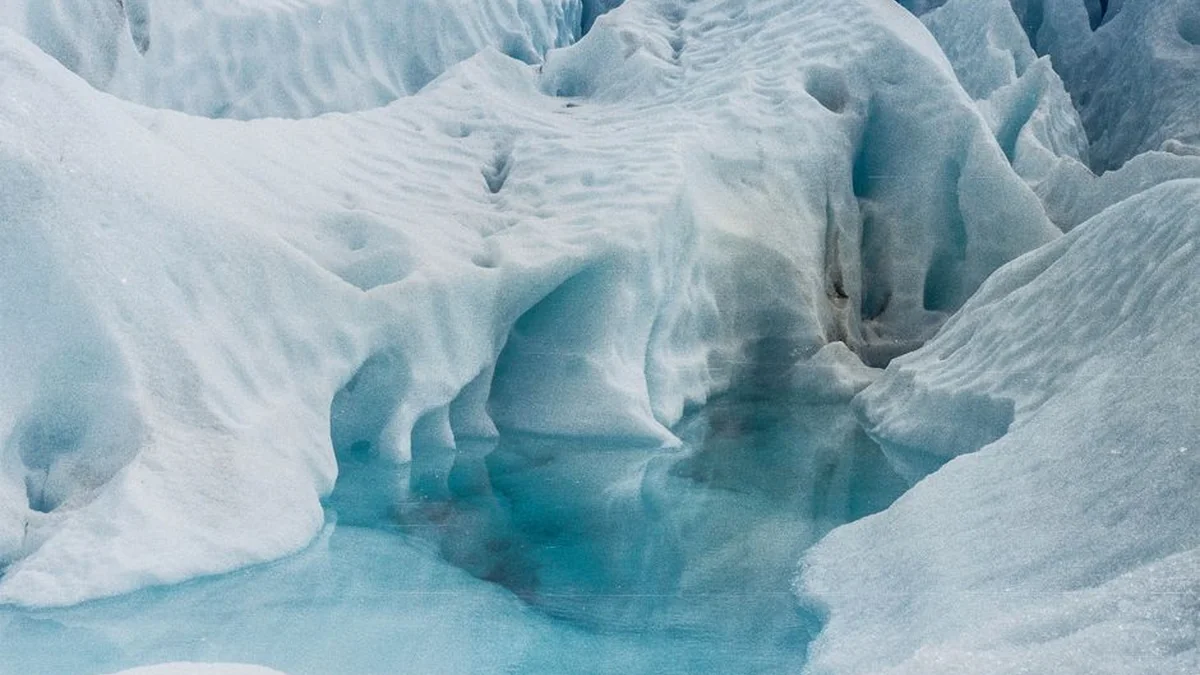
Supervisors from the Swiss monitoring service for glaciers (Glamos) have reported that Swiss glaciers are experiencing substantial ice loss attributed to the ongoing heatwave affecting Europe. According to reports, the snow and ice accumulated in the Swiss glaciers over the past winter are projected to completely melt by Monday. This timeline is considered a critical indicator for predicting the rate of further melting throughout the remainder of the year, extending through October.
The early depletion of seasonal ice directly correlates with a measurable reduction in the overall volume and size of the Alpine glaciers. Data collected since the year 2000 shows that the last time this specific early melting threshold was reached was in 2022, on June 26th. Experts attribute this accelerated melting pattern to the combination of the current heatwave and the conditions observed during the May heatwave.
This concerning climatic trend is anticipated to persist through October, signaling sustained thermal stress on the ice masses. The continuous melting process underscores the sensitivity of the region’s cryosphere to elevated temperatures. The rapid disappearance of accumulated snow and ice is forcing scientists to recalibrate models predicting the long-term stability and volume of the major glaciers.
The data suggests a persistent downward trajectory in ice mass that requires continued monitoring to fully assess the ecological and hydrological impacts across the Swiss Alps.
Topics: #glaciers #snow #melt