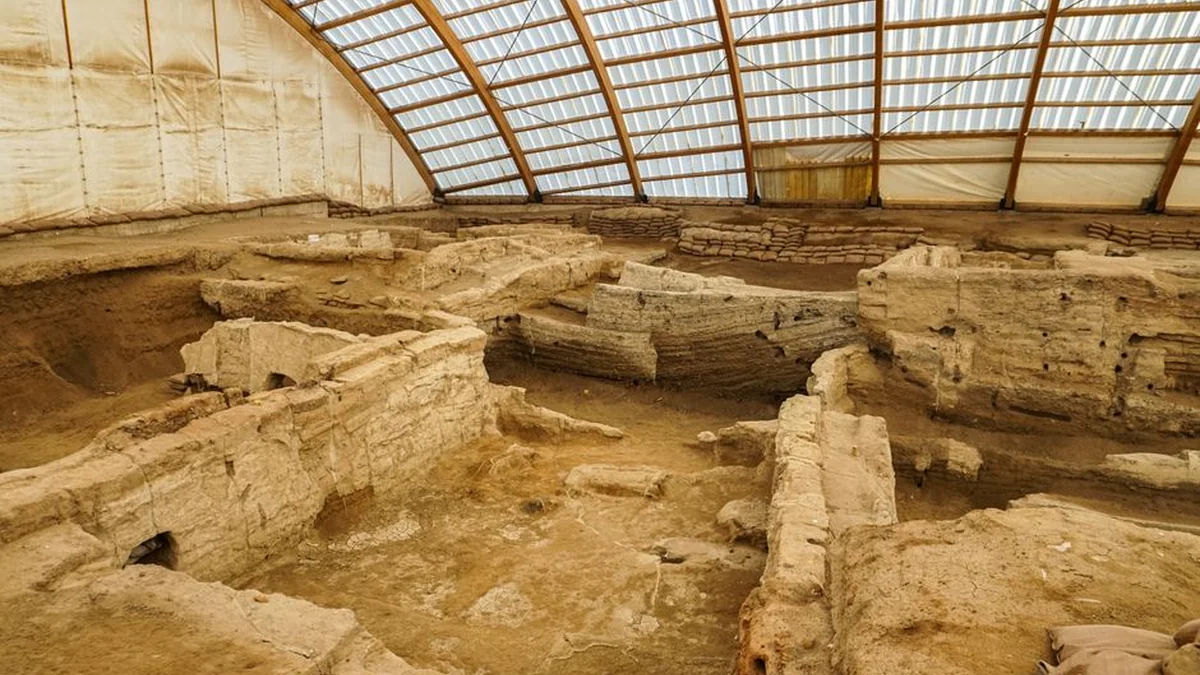
Archaeologists have reported the significant discovery of an early neolithic “fire world” and associated ritual sites at Velushka Tumba. The excavation, conducted at a crucial prehistory site in Pelagonija, has revealed evidence dating back approximately 8,000 years, offering substantial insight into the lives and emerging consciousness of the region’s earliest inhabitants. The excavation effort was spearheaded by the N.U.
“Factory and Museum” – Bitola and Centaurt. Researchers uncovered monumental hearth structures alongside complex ritual arrangements, suggesting sophisticated early social and spiritual practices within the community. These findings are critical for understanding the transition into settled life during the Neolithic period.
Complementing the primary excavation work, international scientific collaboration has been integral to the research. Experts from the German Archaeological Institute and the University of Basel are currently analyzing materials recovered from the site. Their work focuses specifically on archaeobotanical studies and radiocarbon dating, providing scientific depth to the archaeological record.
The announcement of these findings was made on July 6, 2026. The combination of physical structural evidence—such as the hearths and ritual complexes—with advanced scientific analysis promises to reshape current understandings of early human adaptation and cultural development in the region. The site continues to yield data vital to the study of early settled agricultural societies.
Topics: #discovered #neolithic #velushka